Krabi Road
Ban Chinpracha
A mansion
See this stopGuides
Language
Currency
See availabilityfrom $54 · cancel without payingYour group, priced
Compare 4 side by side
Compare day trips that include time in the old quarter.
≈
View≈
View≈
View≈
ViewGetYourGuide's starting prices, converted at the ECB reference rate; exact pricing appears when you book.
Learn how tin built the old town, what Sino-Portuguese really means, which buildings to step inside and how to read the shophouses on your own walk.
Editorial team, phuketoldtowntour.click · Updated November 16, 2026 · Reading: 7 min
Key facts
Sino-Portuguese is a label for a mixture, not a single style. In Phuket Old Town it describes townhouses and public buildings that combine Chinese habits of building with European ideas of ornament and proportion. TAT explains the name in simple terms: Portugal and China were the most influential of the immigrant cultures, so the old town blends the architectural styles of both.1 The CNN Travel feature that TAT quoted used a related label, Sino-Colonial, for the same shophouses.6
The mixture is visible in details you can check yourself. Some features lean toward Chinese building habits and others toward European ornament, and you can spot both on a single street without knowing which is which. It is enough to notice that neighbouring houses are never quite alike: carved doors, window shapes, painted trim and stucco all vary from front to front, and the variety is where the pleasure of the walk lies.
The label also hints at who lived here. TAT's governor said the town's charm and identity come from Baba-Peranakan culture, which began when Chinese families migrated to Phuket.7 That is why the quarter is as much a living community as a collection of facades. When you look at a Phuket Old Town shophouse, you are looking at the home and the workplace of people whose families have stayed for generations.
Building types
| Building type | What it was for | Where to see it |
|---|---|---|
| Sino-colonial mansion | A home for a tin owner's family3 | Ban Chinpracha, Krabi Road4 |
| Sino-Portuguese shophouse | Shop in front, family rooms behind15 | Thalang, Dibuk and Krabi Roads, Soi Romanee16 |
| Public building | Offices and schools3 | The Thai Hua Museum, a former Chinese school5 |
| Shrine | Worship for the Hokkien community11 | Pud Jor Shrine, a century-old shrine to Guan Yin11 |
Building types as TAT groups them; the shrine row comes from TAT's Vegetarian Festival release.3,11
The story starts under the ground. In TAT's telling, the island's tin deposits pulled in the trading nations of the world, and the town grew around the people who came to mine, trade and finance the metal.2 Hokkien Chinese arrived first, bringing their tools and traditions, and European mining companies from Portugal, Holland and France followed at the invitation of King Rama V the Great, who wanted help developing the industry.8
Money from tin is easiest to read in the buildings. TAT puts the vast and ornate mansions in the hands of tin oligarchs who made it big, and the shophouses along the streets of the old centre beside them.3 The town is therefore a record of one industry's boom, written in plaster, tile and timber, and you can follow it by noticing which fronts are grandest and which are plain.
Today's story is one of care. Families have kept businesses going in many shophouses,12 and cafes, galleries and boutique hotels have moved into others.13 TAT also reports that talks by academics on how the old town's buildings are preserved were on the programme of the 2023 Chinese New Year festival at Queen Sirikit Park on Thalang Road, so the history is a living subject for the town and not just for visitors.14 If you are in town during the festival, check the programme for talks or walks that explain the buildings.
The town in steps
Tin boom
Tin deposits attracted the trading nations of the world.2
Arrivals
Hokkien Chinese came first, then mining companies from Portugal, Holland and France.8
Mansion era
School to museum
The Thai Hua Museum building was once a Chinese language school.5
Heritage listing
The Vegetarian Festival was listed as intangible heritage in 2018.10
Restoration
Pud Jor Shrine was restored from 2024 to 2026.11
A shophouse is a business and a home under one roof. TAT describes 3 main types of building in old Phuket: the large Sino-colonial mansions of tin owners, the Sino-Portuguese shophouses that line the streets of the centre, and public buildings such as government offices and schools.3 Shophouses are the ones you will walk past most, and the ones that reward a few minutes of attention.
Their plan is long and narrow. Behind a slim front, TAT says, the buildings can stretch back more than 50 metres, with trade done in the front rooms and family life at the back, where you find living rooms, kitchens and even wells for water.15 Many remain family homes or trading premises, a living link with the past in TAT's phrase.12 If a door stands open, a glance down the corridor shows the plan at once.
Look up as well as ahead. The upper facades carry stucco creatures, from local turtles to phoenixes, according to TAT,20 and each family chose its own. Look at the shape of the windows, the pattern in the floor tiles where doors stand open and the way each front handles its stucco. For a first-time visitor, an hour on Thalang Road teaches a great deal about how the whole quarter was put together, and costs nothing.
Your angle
Tell us what interests you and see which part of the heritage fits.
If I want to see how a rich family lived
Ban Chinpracha
If I want the story of the Chinese community
The Thai Hua Museum
Exhibitions cover Phuket history and the immigrant community.5
If I want to understand a shophouse plan
The information centre on Thalang Road
It shows a shophouse layout upstairs and down.18
If I want facades and details
A self-guided street walk
TAT puts Krabi Road, Dibuk Road, Thalang Road and Soi Romanee at the top of the list for shophouses.16
If I want a guide for temples and views too
The home tour
Old town time is 1 hour, from $54.
Step inside
Krabi Road
A mansion
See this stop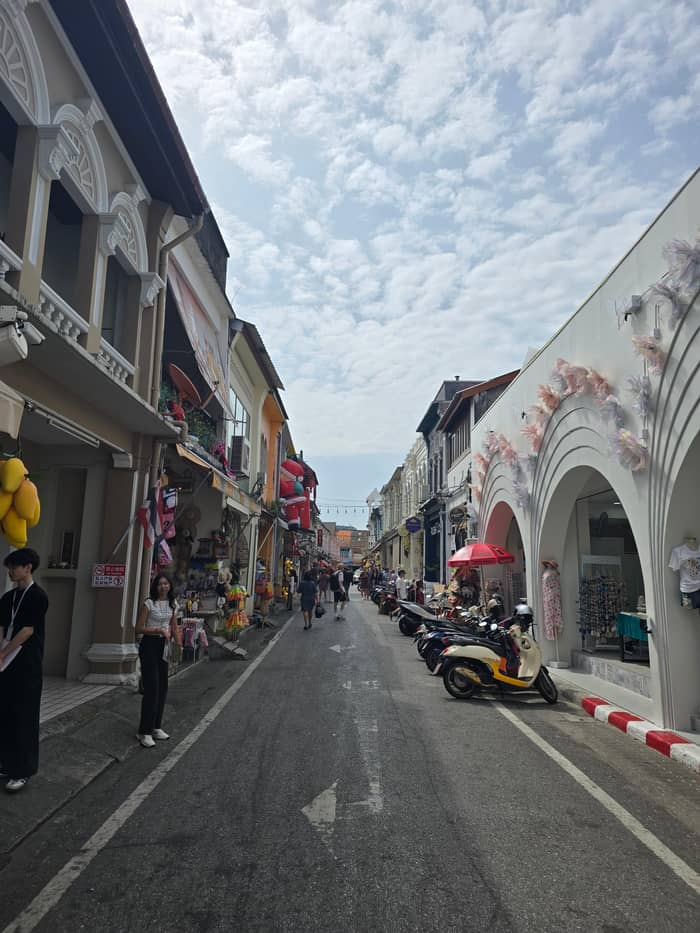
Krabi Road
A former school
Thalang Road
A shophouse layout
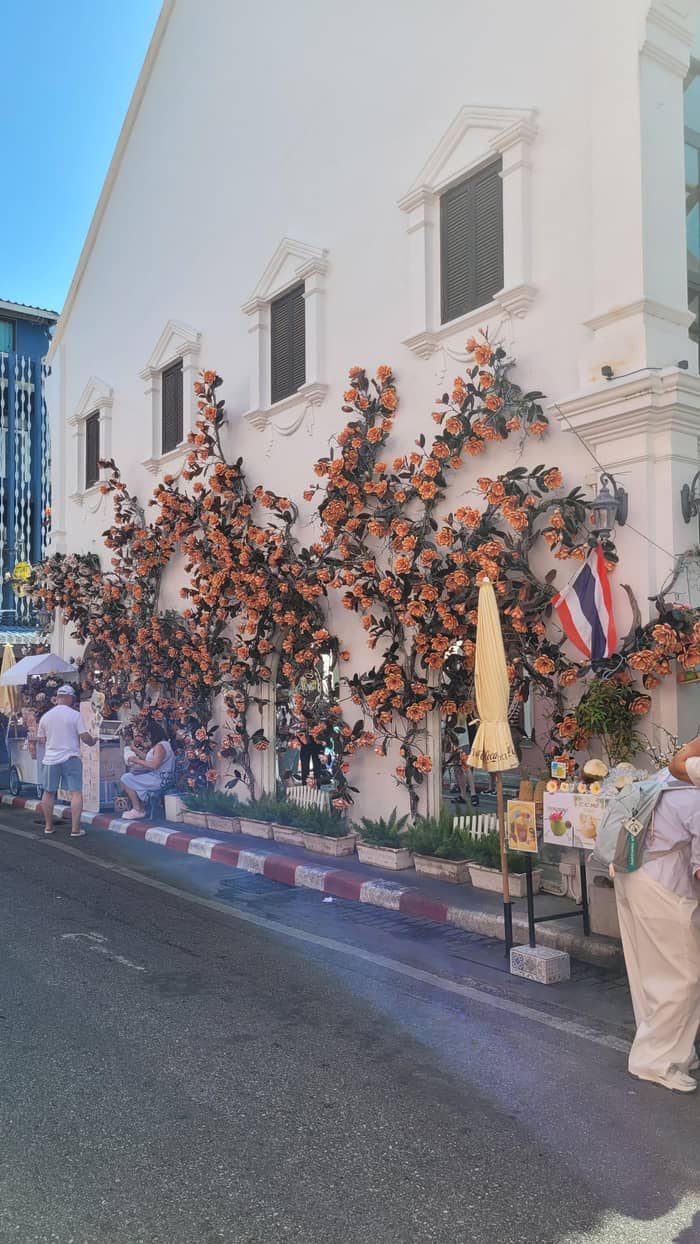
The grandest houses are mostly private, but a few open their doors. Ban Chinpracha on Krabi Road dates from 1903 and welcomes the public.4 Inside, the Italian floor tiles are evidence of imported luxury: wealthy Phuket families used the island's role as a trading hub to bring in fine goods from far away.9 Ask about opening days before you go, because TAT's visiting details date from its feature and can change.
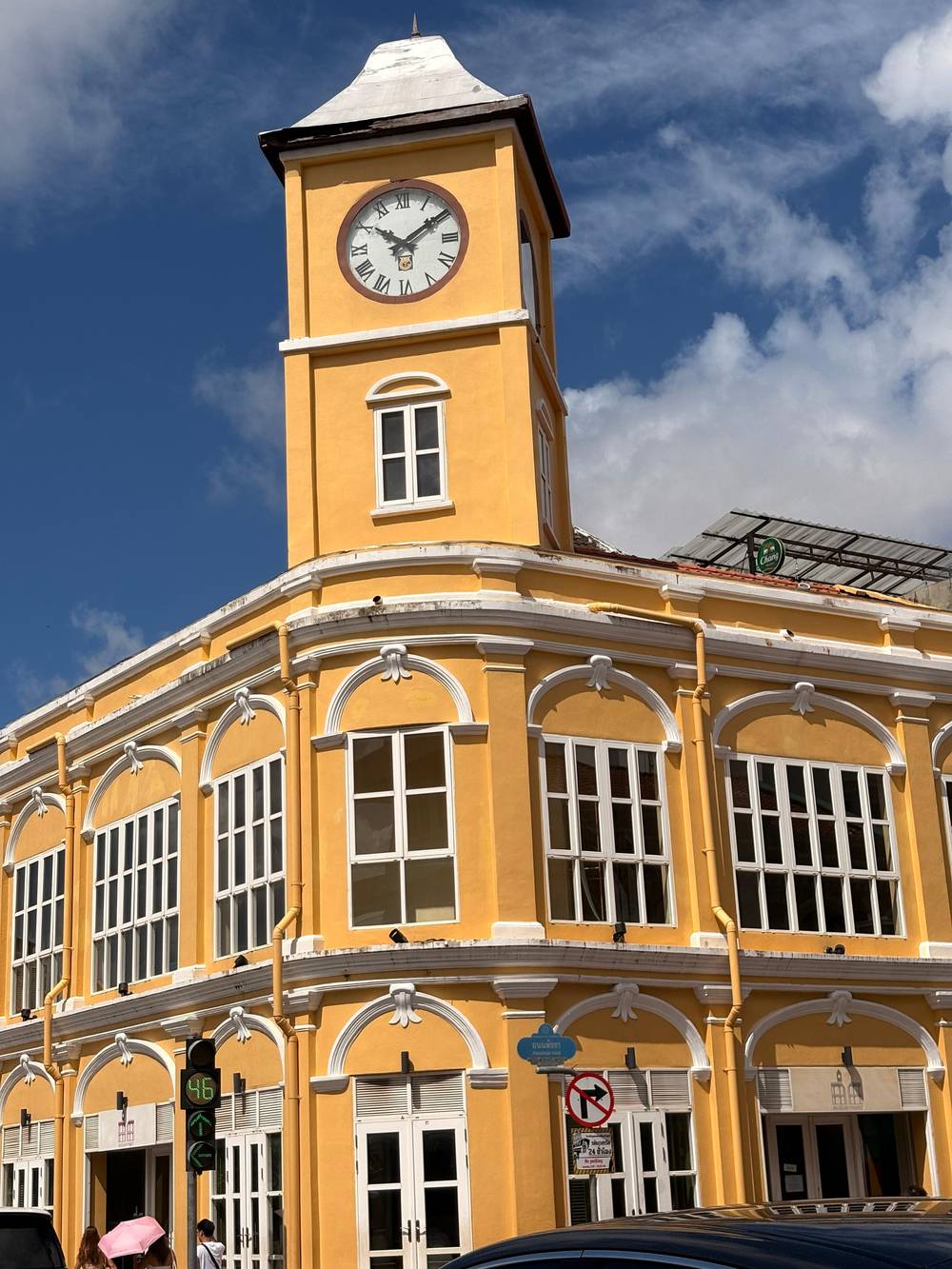
The Thai Hua Museum, also on Krabi Road, is a good place to put the town in context. It stands in a building with a Sino-Portuguese facade, used to be a Chinese language school and now holds exhibitions about the history of Phuket and the lives of the immigrant Chinese community.5 TAT says the displays carry good information in English and cover the tin and opium trade, what people ate and the costumes they wore.17
The Peranakan Museum, where Phuket Road meets Phang Nga Road, hosted a projection mapping show in 2021 that opened a month-long festival in the old town.24 Between the museums and the information centre on Thalang Road, which lays out a shophouse upstairs and down,18 you can get a feel for the old town in a morning, the span TAT suggests for exploring it.19
Heritage is not only brick and plaster. The Pud Jor Shrine honours Guan Yin and other Chinese deities, is about a century old and was restored from 2024 to 2026.11 In 2018, the same TAT release adds, the Department of Cultural Promotion added the Phuket Vegetarian Festival to Thailand's list of intangible cultural heritage.10
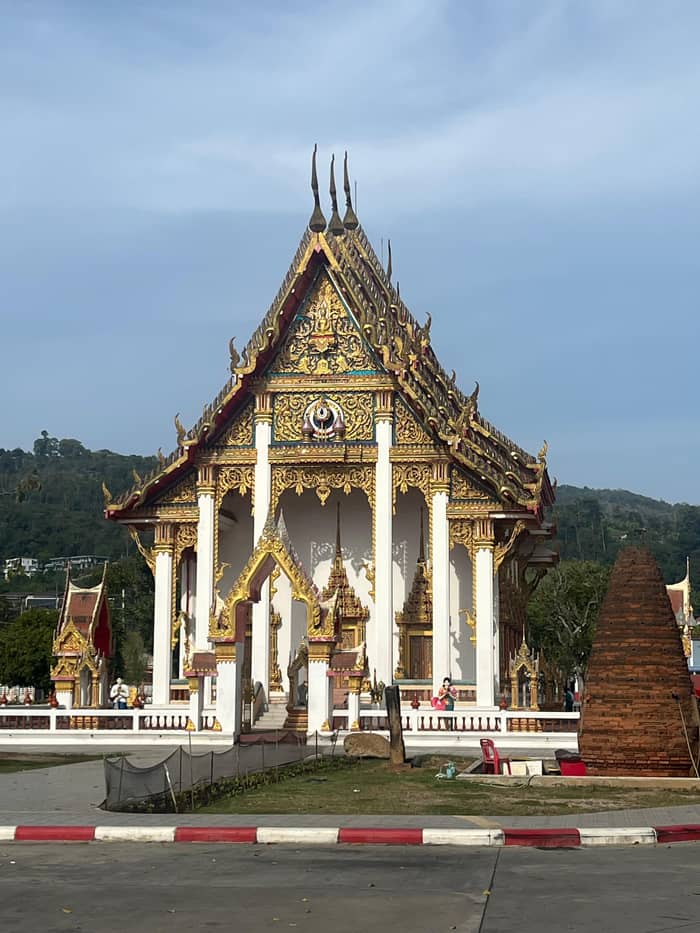
The home tour sold on this site includes a stop at the Saeng Tham Shrine, which the listing gives 15 minutes. The guide does the talking there, and the stop is a useful reminder that the old town's religious life continues beside the architecture. Dress modestly, remove shoes where others do, and keep your voice low while worshippers are present. Treat any shrine you pass on the walk in the same way, even when it looks quiet.
If you want to see the heritage in motion, plan around the calendar. TAT also names the local Vegetarian Festival, when every house is decorated, as a good moment for a walk, and links Phuket's Chinese New Year to the Phuket Old Town Festival, which sets cultural shows, street art and food fairs in front of the shophouses.21,25 The best-time page has the details.
Video
Phuket Unfiltered on YouTube · The video stays unloaded until you press play.
Because Portugal and China were the most influential of the immigrants, Phuket’s old town blends the architectural styles of the two cultures
On your walk
Start at the information centre on Thalang Road and ask for a map; TAT notes that free maps with suggested walking routes past the key buildings are easy to find.26 Then pick a street, preferably one where TAT sees the best shophouses: Thalang, Dibuk or Krabi Road, or Soi Romanee.16 Slow down at each corner and compare the facade in front of you with the previous one.
A guide adds names and stories that a plaque cannot. CNN Travel advised signing up with a local firm that specialises in old town walks, a point TAT repeated when it reported the listing.27 On a half-day city tour, remember that the old town is one stop among several, so a self-guided walk is the better choice for architecture, and the tour is the better choice if you want temple and viewpoint stops as well.
Whichever you pick, bring patience and a small notebook or phone. Write down a door, a window shape and a tile pattern in the morning, then look for them again in the afternoon. You will start to notice how builders copied each other and how owners competed. That is the pleasure of the place: the old town rewards the visitor who looks twice and then asks, quietly, about the family behind the shutters.
FAQ
TAT says Portugal and China were the most influential immigrant cultures, so the old town blends the architectural styles of both.1
TAT says the mansion on Krabi Road dates from 1903 and is open to the public.4
TAT ties the UNESCO Creative City listing to Phuket's gastronomic delights, so the title concerns cooking rather than the old buildings.28
TAT treats the old quarter as a morning's exploration.19
Sources
Planning a day in Phuket Old Town? Ask a real person here.