Start here
Thalang Road
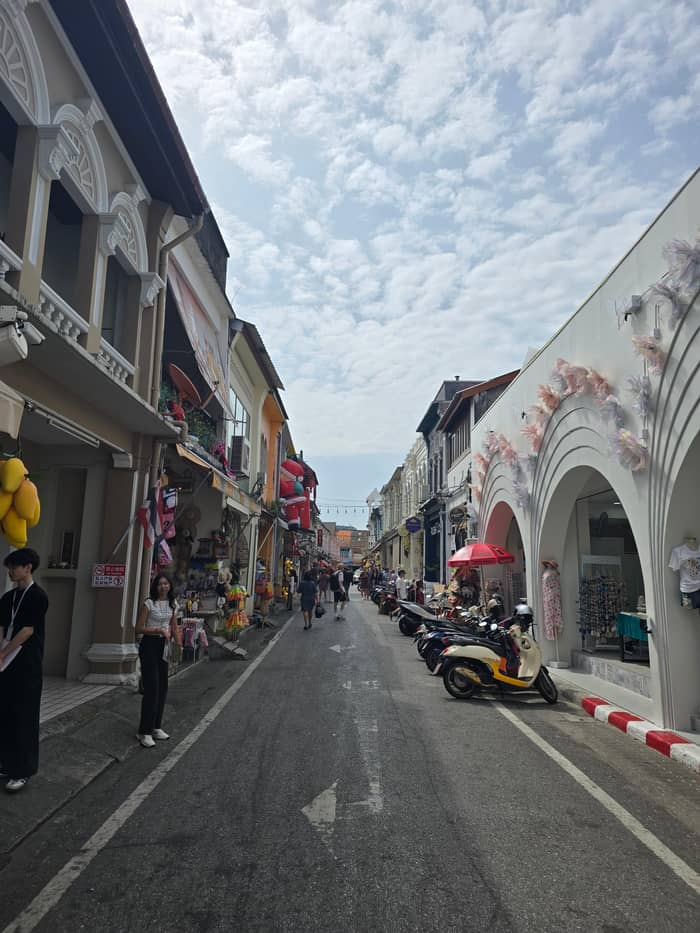
Shops and batik
- Look forBatik shops and stucco fronts14
- ShelterA covered front veranda5
- InfoVisitor centre on the road8
Guides
Language
Currency
See availabilityfrom $54 · cancel without payingPick out your stop
See 30 route stops
Start by picking a route; tap a pin or stop for its note and Google Maps.
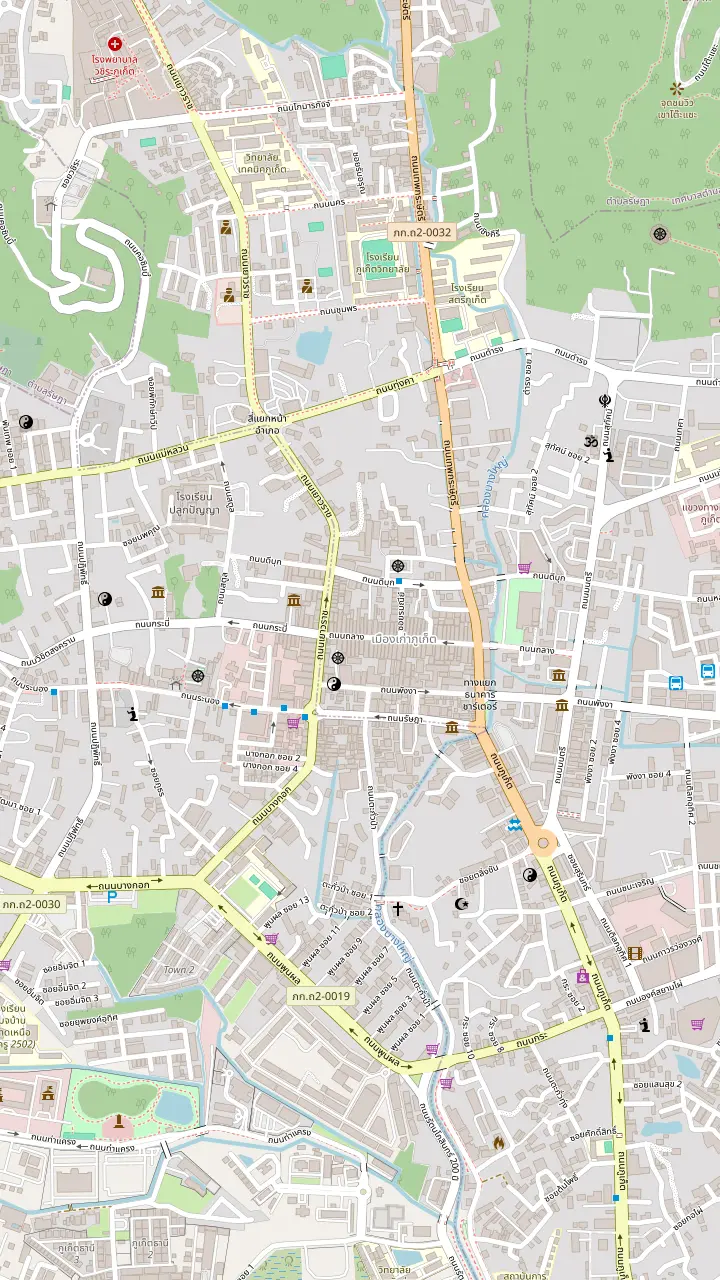
A road of shophouses and batik shops that holds the visitor information centre.
Google MapsA short lane of restored shophouses, named by TAT among the best places for Sino-Portuguese fronts.
Google MapsOne of the streets TAT names for the best Sino-Portuguese shophouses.
Google MapsThe road where the Peranakan Museum meets Phuket Road, a stage for the town's festival shows.
Google MapsA museum in a Sino-Portuguese building that was once a Chinese language school.
Google MapsA mansion open to the public, with Italian floor tiles.
Google MapsA museum at the junction of Phuket and Phang Nga Roads.
Google MapsA century-old shrine to Guan Yin, restored from 2024 to 2026.
Google Maps
The old town, which TAT says can easily be explored in a morning.
Google MapsA Buddhist temple that the home tour visits for 30 minutes, with a monk blessing.
Google MapsThe Big Buddha site, which the listing says has been temporarily closed to visitors since 2 September 2024.
Google MapsA hillside viewpoint just south of Kata Noi Beach, the first photo stop of the home tour.
Google MapsA viewpoint with a white windmill, a few minutes from Promthep Cape toward Nai Han Beach.
Google MapsThe cape at the southern end of the island, one of the most photographed places in Phuket.
Google MapsA hill viewpoint above the town, used as a sunset stop on a food tasting tour.
Google Maps
Phuket International Airport, in the north of the island.
Google MapsThe bus station on the edge of the old town.
Google MapsThe old town, which TAT says can easily be explored in a morning.
Google MapsA beach town on the west coast of the island.
Google MapsA long beach on the west coast, south of Patong.
Google MapsA beach south of Karon, close to the Karon Viewpoint.
Google MapsA fishing village and beach in the far south, near Promthep Cape.
Google MapsA Buddhist temple that the home tour visits for 30 minutes, with a monk blessing.
Google Maps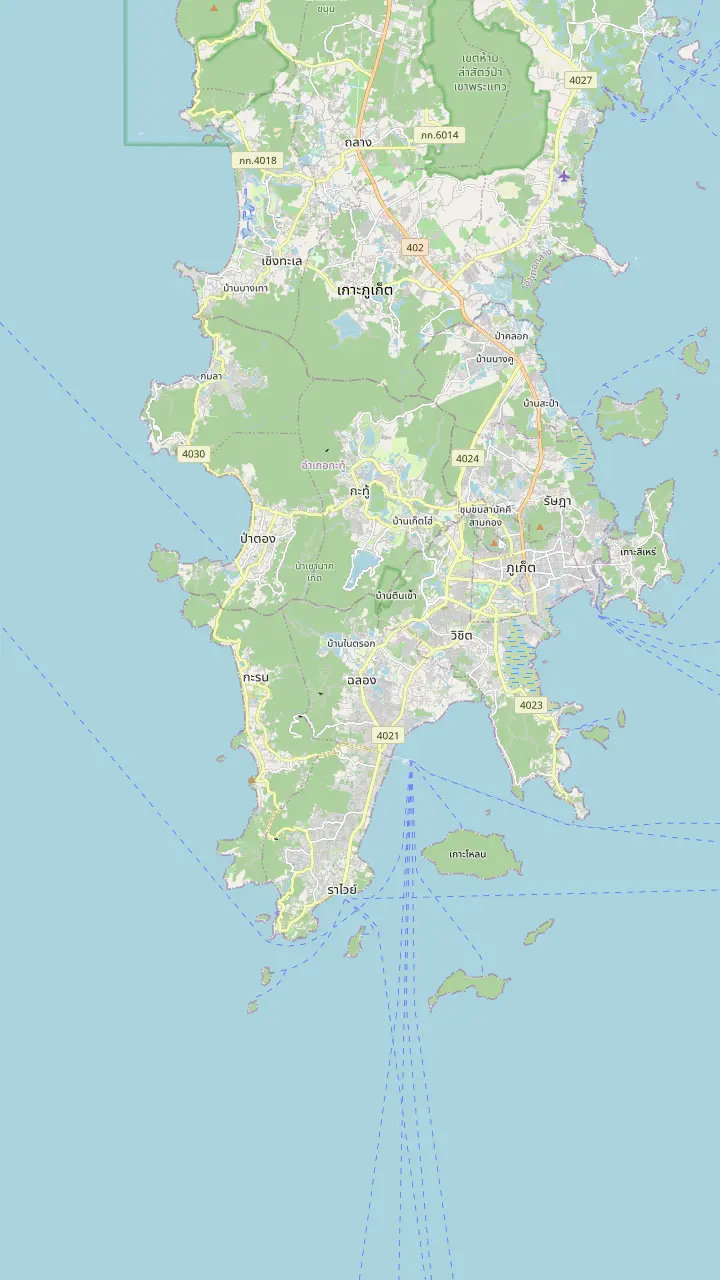
The old town, which TAT says can easily be explored in a morning.
Google MapsA beach town on the west coast of the island.
Google MapsA long beach on the west coast, south of Patong.
Google MapsA beach south of Karon, close to the Karon Viewpoint.
Google MapsA quieter beach on the west coast, north of Patong.
Google MapsA fishing village and beach in the far south, near Promthep Cape.
Google MapsA Buddhist temple that the home tour visits for 30 minutes, with a monk blessing.
Google MapsMap data: © OpenStreetMap contributors
The colorful streets of Phuket Old Town are a few lanes of painted shophouses you can cross on foot. See which roads to walk, what is old and what is paint, and where to start.
Editorial team, phuketoldtowntour.click · Updated November 16, 2026 · Reading: 7 min
Key facts
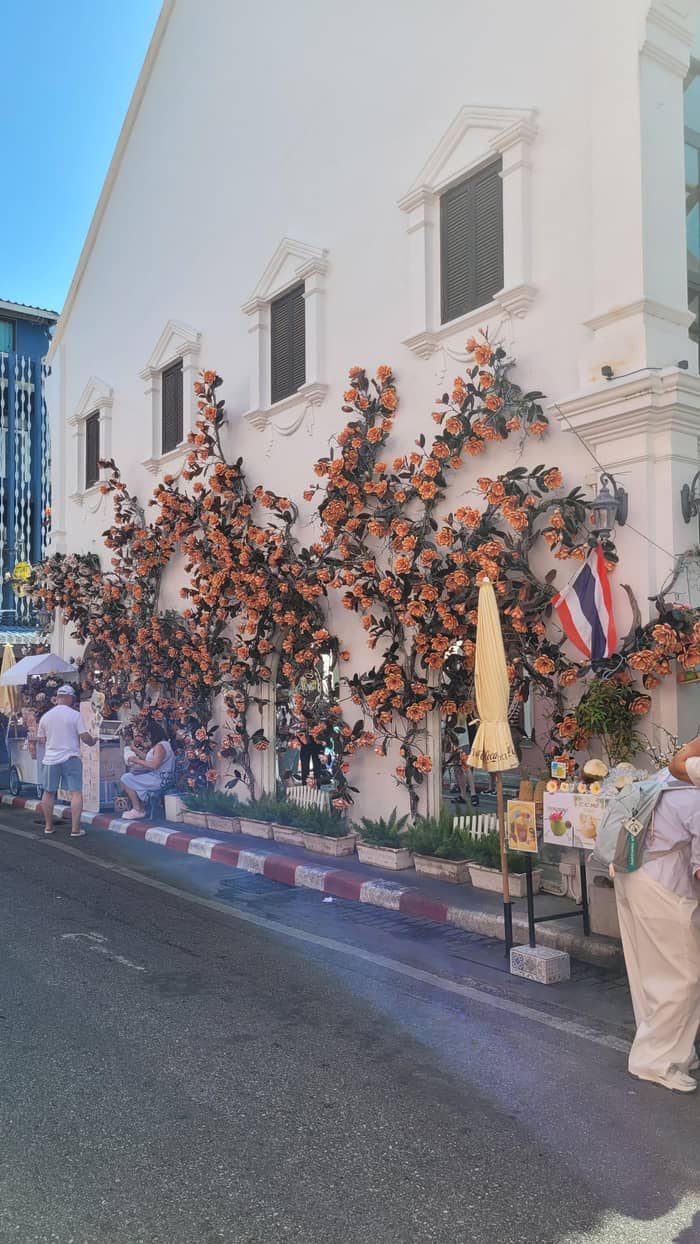
Phuket Old Town earns its colour from the buildings, not from billboards. Rows of narrow townhouses stand shoulder to shoulder, painted in sherbet pinks, ochres, pale blues and sea greens, with carved timber doors and stucco faces above the windows. Walk a few minutes in any direction from the middle of the quarter and the palette repeats itself, with small changes of shutter, tile or flower pot. The overall effect is a town that looks as if someone arranged it for photographs, and then went back to selling hardware inside.
That last part is true. The Tourism Authority of Thailand notes that many of these shophouses remain family homes or working premises, among them print works and hardware shops, and describes them as a living link with the past.6 TAT adds that families whose roots in the quarter run back over a century still make up a thriving community there.7 Colour here is a by-product of daily life, so the best streets are the ones where the shutters are up and the shop is open.
The wider picture is architectural. Fortunes made in tin, Chinese and European influence and a long tradition of Baba-Peranakan culture came together here, and the result is what visitors call Sino-Portuguese. The history behind the facades gets a page of its own; here the question is simply where to walk, what to look at on each road and how to leave with pictures you like and neighbours you have not disturbed.
Street by street
| Street | What you will see | Good for |
|---|---|---|
| Thalang Road | Shophouses, batik shops and the visitor information centre14,8 | A look around |
| Soi Romanee | A short lane of restored shophouses1 | Cafes and close-up details |
| Dibuk Road | Sino-Portuguese shophouses and a shuttle stop1,10 | Side-street detail |
| Krabi Road | Thai Hua Museum and Ban Chinpracha11,12 | Mansions and museum stops |
| Phang Nga Road | The junction with the Peranakan Museum13 | Festival art and projections |
Street names as TAT writes them; Krabi Road and Phang Nga Road cross the core of the old town on the map above.1
Start with Thalang Road, which crosses the heart of the quarter. TAT names Thalang, Dibuk and Krabi Roads together with Soi Romanee as the best addresses for Sino-Portuguese shophouses.1 On Thalang Road you will also find batik shops run by ethnic Malay and Indian families, which CNN Travel noted when it listed the town among Asia's picturesque places, as TAT reported.14 Between the shopfronts, look up: the upper storeys carry the colour. Inside Ban Chinpracha, Italian floor tiles show how wealthy families imported luxury goods.15
Thalang Road is also where the visitor information centre sits. TAT points visitors to it for a peek inside a shophouse, with the layout shown upstairs and down.8 That matters for the photographer because a narrow frontage hides a very deep building: the same TAT feature says these houses can run back more than 50 metres.16 A few minutes inside the centre explains the rooms behind the doors you will photograph from the street, and gives your eye something to look for when you step back out onto the pavement.
Thalang Road is a main route on festival nights. TAT reports that the closing procession of the Vegetarian Festival draws onlookers to Thalang Road, Phuket Road and Surin Circle.17 If you are after empty pavements and clean frames, pick another day of the year. If you want colour, flags, incense and noise, that crowd is the picture, and a wide lens plus a patient eye will do more for you than waiting for the street to clear.
Route on foot
Start
Begin beside the centre where a shophouse layout is explained.8
Early turn
A short lane of restored fronts with cafes and galleries.9
Next
A shophouse street with a stop on the free shuttle loop.10
Then
Finish
Back toward the museum at the junction with Phuket Road for coffee.13
Soi Romanee is a short lane, and TAT names it among the addresses where the best Sino-Portuguese shophouses stand.1 It is only a few doors long, so allow time to wander back and forth rather than to walk through, and look at the doors, tiles and potted plants that give each house its own character. Cafes, galleries and small guesthouses have settled in the restored houses, and TAT notes that many old shophouses have been converted into galleries and cafes, so there is always a place to stop for a snack and a drink.9
Dibuk Road runs parallel to Thalang Road a short walk to the south. TAT lists it with Thalang and Krabi Roads and Soi Romanee for the best of the shophouses.1 It makes a good next street after Thalang Road, with the same shophouse rhythm and a less polished look in places. The free electric shuttle that loops through the old town stops here, and its 16 designated stops include Dibuk Road and the Phuket Thaihua Museum.19,10
Krabi Road is the address for the grander buildings: the Thai Hua Museum in a Sino-Portuguese facade, and Ban Chinpracha, a mansion from 1903 that welcomes visitors.11,12 Mansions are harder to photograph than shophouses because gates, gardens and visiting hours get in the way, so treat them as a pause between streets rather than the main event of the walk. Phang Nga Road completes the grid, running past the museum that hosted a projection show in 2021.13
Your picture
Name your priority for the walk and a starting point follows.
If I want classic Sino-Portuguese fronts
Thalang Road
TAT lists it first among the best shophouse roads.1
If I want cafes and a short, pretty lane
Soi Romanee
Restored houses there hold cafes and galleries.9
If I want a street that the free shuttle reaches
Dibuk Road
The shuttle loop has a stop on Dibuk Road.10
If I want a museum and a mansion
Krabi Road
If I want a guide to explain the history
Join the home tour
It spends 1 hour in the old town on a day from $54.
Pick a street
Start here
Shops and batik
Close-ups
A short lane
See this street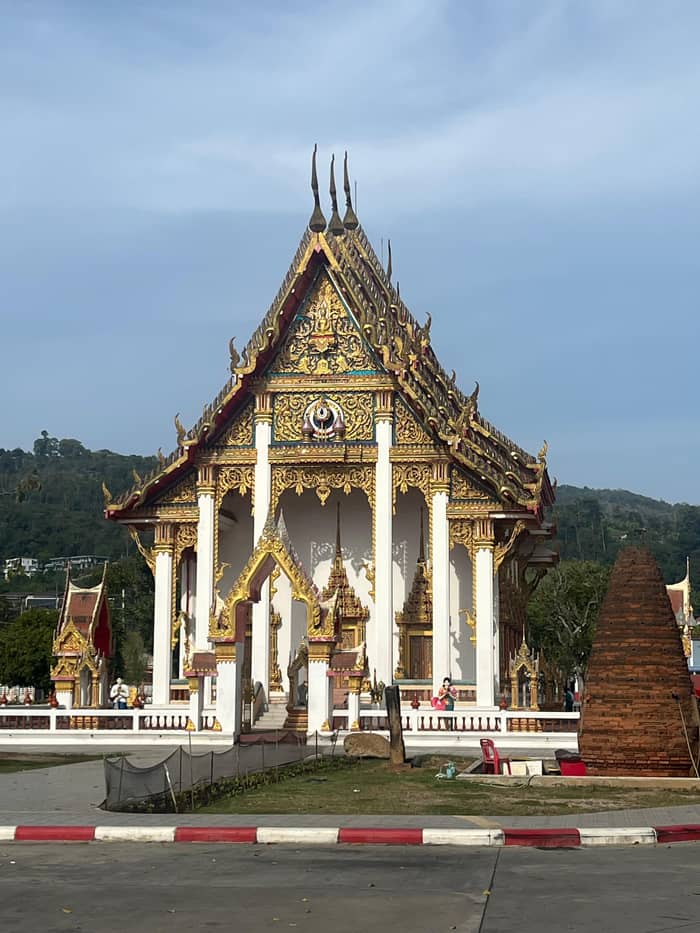
Landmarks
Museum and mansion
See this streetVisitors ask about Phuket Old Town street art, and the short reply is that it sits as a thin layer over a great deal of heritage. TAT's own photo of the old town shows a graffiti wall on a Sino-Portuguese building,3 and there is more, tucked down side lanes and across shutters, but no official map of murals exists that we could find. Treat mural hunting as a bonus to walking the streets, not a reason for a trip.
Temporary art is a better bet. TAT recorded that the 2021 Colourful Phuket festival put art installations and recycled art displays in the Old Town District in its opening week, and a projection mapping show at the Peranakan Museum on the corner of Phuket and Phang Nga Roads.4,13 The Thailand Biennale Phuket spread works over 19 venues, among them the former Pearl Theatre and the waterfront at Saphan Hin, until April 2026.24
Festivals also repaint the town in other ways. The annual Phuket Old Town Festival, which TAT ties to the Chinese New Year celebrations, adds shows, food fairs and street art to these frontages.25 Check the calendar on the best-time page before you travel: a street that is merely pretty on a weekday can turn spectacular the weekend a festival arrives.
Add a guide
Price the days that give the old quarter some time.
Compare 4 side by side
Price the days that give the old quarter some time.
≈
View≈
View≈
View≈
ViewGetYourGuide's starting prices, converted at the ECB reference rate; exact pricing appears when you book.
The shophouses were built to be walked past in all weather. TAT describes a front veranda joining the shophouses, which gives pedestrians shelter from the elements.5 In practice that means a passing shower is a reason to slow down, not to cancel the morning. Walk under the covered fronts and look at the details at eye level: tiles, door hinges, shutters and the carved stucco overhead.
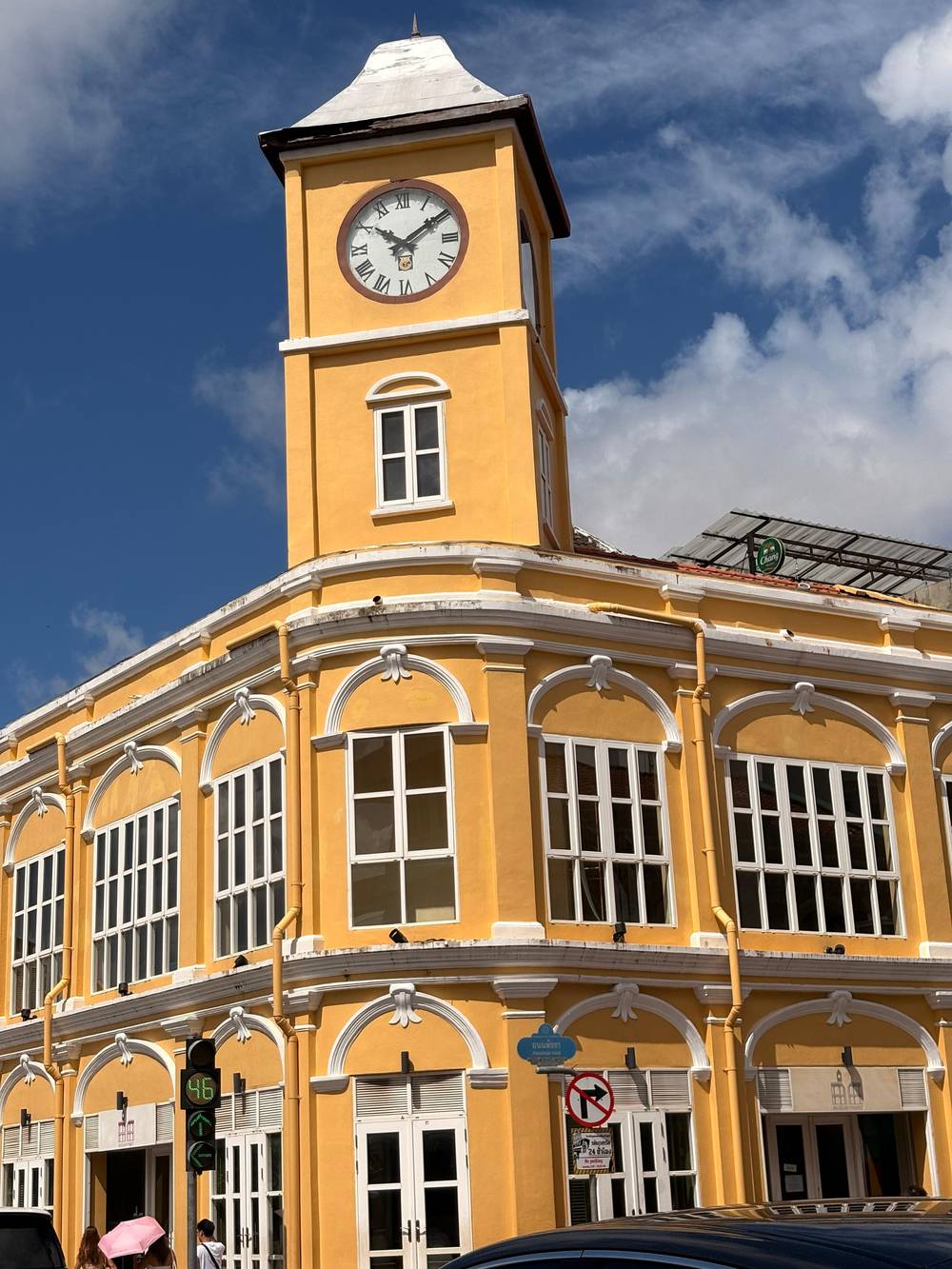
Stucco is the detail to look up for. TAT says the upper facades carry moulded creatures, from local turtles to fantastical phoenixes, and a flat midday sun flattens them, while the lower sun of morning or late afternoon brings the relief up.26 Pack water, choose comfortable footwear for a long stroll, and take a small camera or phone with a cloth for lenses, because heat and humidity fog glass when you step out of a cafe.
An hour on foot is plenty for the core. Begin at Thalang Road beside the visitor information centre, turn into Soi Romanee, cross to Dibuk Road, loop along Krabi Road past the museum and the mansion, then return along Phang Nga Road for a coffee. The timeline below sets out the pace. The guided tour sold on this site gives the old town 1 hour as a stop, which is the same pace. Allow extra time if you stop for coffee, step into a gallery or sit under a veranda while a shower passes.
Video
Endless Journey on YouTube · The video stays unloaded until you press play.
There are many freely available maps with suggested walking tours around the most important buildings
Before you go
Because so many of these buildings are homes, ordinary courtesy matters. Do not step through an open door without being asked, keep voices down in the lanes at night, and never point a lens through a window. Buy a drink or a small souvenir from the shops whose fronts you photograph.6 A few small purchases do more for the quarter than any hashtag, and a friendly hello to a shopkeeper goes a long way when you ask where the light falls best.
Shrines are working places of worship. The Pud Jor Shrine, dedicated to Guan Yin and a century old by TAT's description, was restored from 2024 to 2026.20 Dress modestly, keep your shoulders and knees covered, take your shoes off where others do and follow the temple etiquette that TAT sets out if you step inside, even for a quick look at the altar. There is a full checklist on the Wat Chalong page of this site for temple dress and conduct.
Finally, plan around the calendar. TAT singles out the Vegetarian Festival as a time to walk the old town, when every house is decorated.27 That is also the time of crowds, firecrackers and closed roads. If you prefer to look at facades in peace, go in the dry months and on a weekday morning, and save the festival for a separate trip when you can give the crowds and the noise your full attention instead of squeezing them in between other plans.
FAQ
TAT lists Thalang, Dibuk and Krabi Roads and Soi Romanee as the addresses for the best Sino-Portuguese shophouses.1
TAT puts a full tour of the old quarter at a morning's work, and a photo walk along the core streets takes less.2
TAT says many houses have become guest houses and cafes, so it is possible to see the inside and even stay the night.1
TAT says you can explore a shophouse layout upstairs and down at the visitor information centre on Thalang Road.8
CNN Travel's tip, relayed by TAT, was to book a local operator that focuses on old town walks.28
Sources
Planning a day in Phuket Old Town? Ask a real person here.